In almost every leadership team, there is someone who quietly opts out of the creative conversation. The strategist. The operator. The one who runs the numbers and asks the hard question that ends the brainstorm. When the talk turns to ideas, they lean back and say some version of the same line. I am not the creative type.
They believe it. So does the room. And it is one of the most expensive misreadings a company makes about its own talent.
Because that person is usually the most creative asset you have. They just have not been trained to use it, and the culture has spent years telling them it is not their job.
The person who insists they are not creative is often the one whose ideas would actually survive contact with reality.
The lie about rigor and imagination
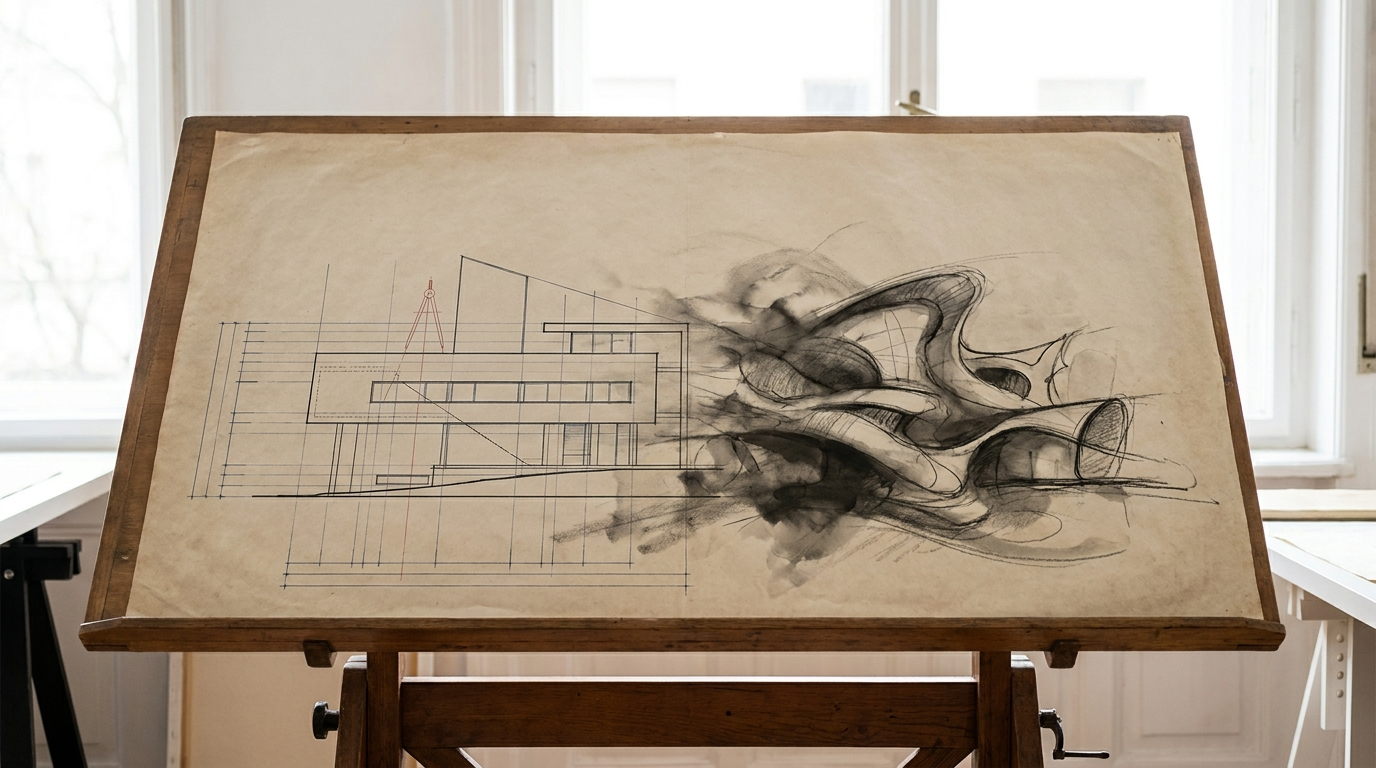
Somewhere along the way, business adopted a quiet superstition. That creativity lives on one side of the brain and analysis on the other. That you are either the visionary or the executor. That rigor is where ideas go to die.
It is a comforting story because it lets everyone stay in their lane. The creatives get to be loose and the analysts get to be safe. But it does not match how real breakthroughs happen.
Originality without discipline is a mood. It feels productive and changes nothing. A truly original idea is not the wild one. It is the one that is both unexpected and right, and you only know it is right because someone pressured it until it held.
That pressure is exactly what an analytical mind is built to apply. The habit of asking why, of stress testing an assumption, of refusing the first answer that sounds good. Those are not the enemies of a great idea. They are how you find one.
Why the analyst has the higher ceiling
Give a so called creative person a blank page and you often get volume. Lots of ideas, loosely held, few of them load bearing. Energy in the room, little on the table by Monday.
Give an analytical person the same page after you have trained them to generate, and something different happens. They do not produce more ideas. They produce sharper ones. Each option arrives already weighed against constraints, already pointed at a real problem, already half built.
This is the part most companies miss. The bottleneck for your analytical people was never imagination. It was permission and method. They were never taught that divergence is a skill with its own technique, so they defaulted to the only mode anyone rewarded them for. Convergence. Judgment. The no.
Teach that same mind to open up on purpose, then close down with the rigor it already has, and you get the rarest output in any organization. Original work that is also disciplined. Ideas that are strange enough to matter and solid enough to ship.
Imagination is the easy part to admire. The hard part is an idea that holds up under questioning, and that is exactly what your analysts do for a living. They have spent their careers separating what sounds good from what is true. Point that instinct at a fresh idea instead of against it, and it stops killing creativity and starts refining it.
Trained, under pressure, on purpose
We did not work this out in a seminar. We learned it on production, where a film crew has no choice but to invent the right answer before the light changes and the budget runs out. The people who thrive there are not the dreamers. They are the ones who can think with precision while the clock is against them.
That is the version of creativity a business actually needs. Not free play. The ability to produce a sharp, original answer on time, under constraint, when the stakes are real. And it turns out the analytical mind, the one that has been told for years to sit out the creative part, is built for precisely that environment.
So the move is not to hire more so called creatives or to send everyone to a workshop that feels good and fades by lunch. The move is to look at the people already running your hardest problems and recognize what they are. Latent creative capacity, undertrained and underused.
Train it the way you would train any high value capability. Deliberately, with method, under conditions that resemble the real ones. The analyst who learns to create does not become less rigorous. They become the most dangerous person in the market, because they can imagine the new answer and then prove it works.
Stop waiting for your creatives to get more disciplined. Start teaching your most disciplined people to create.
The next time someone in your leadership team says they are not the creative type, do not nod and move on. That sentence is not a fact about them. It is a gap in your training, and it is sitting on top of your highest leverage talent.
Your most rigorous mind is your most underused creative one. Train it.